
The Wrestlers
Firenze, Italy 2020
Firenze, Italy 2020
Collaboration with Giacomo Run.
Curated by Matteo Bidini for Street Levels Gallery.
Curated by Matteo Bidini for Street Levels Gallery.
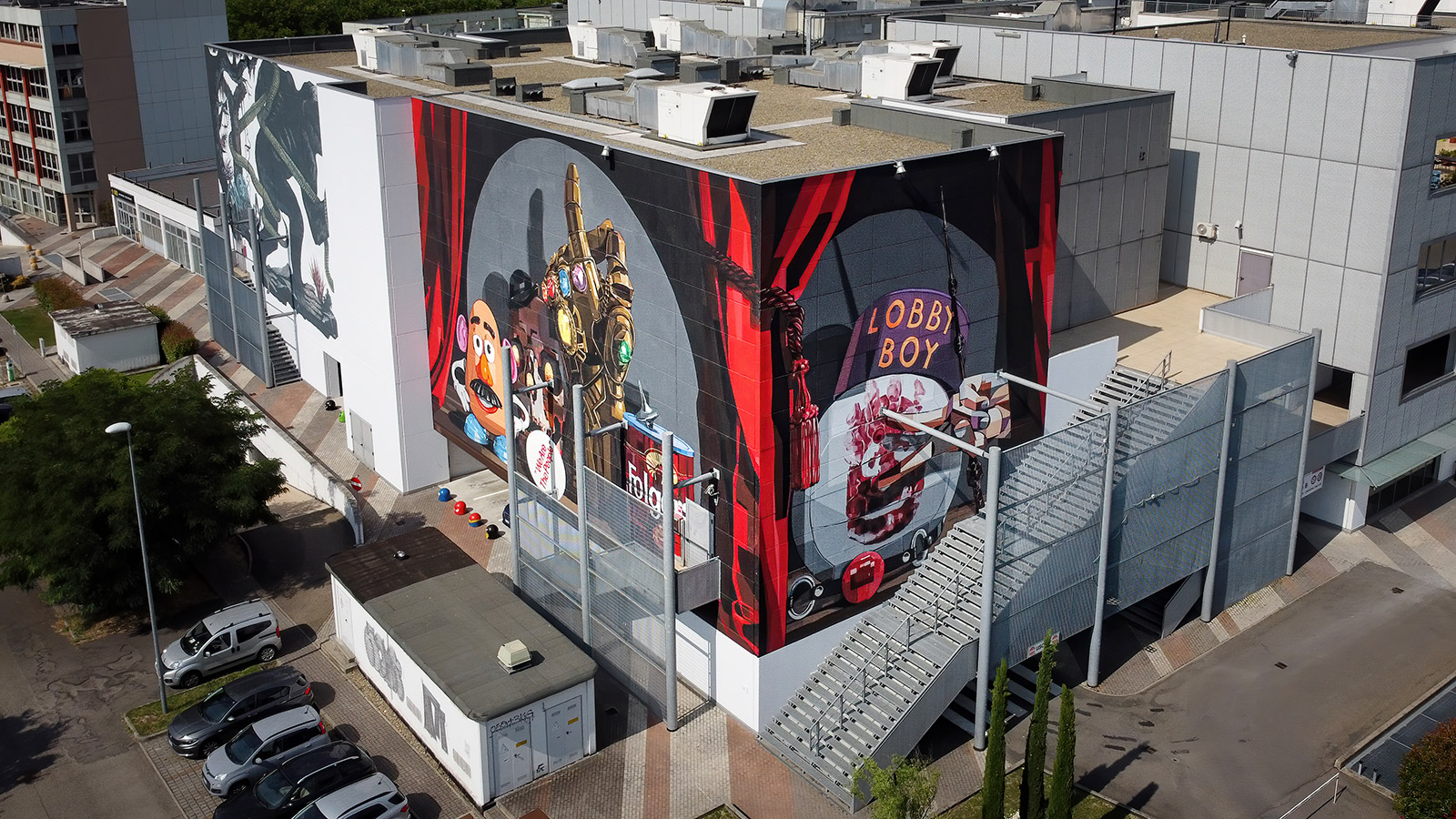
Two Halves Vanitas
Modena, Italy 2020
Modena, Italy 2020
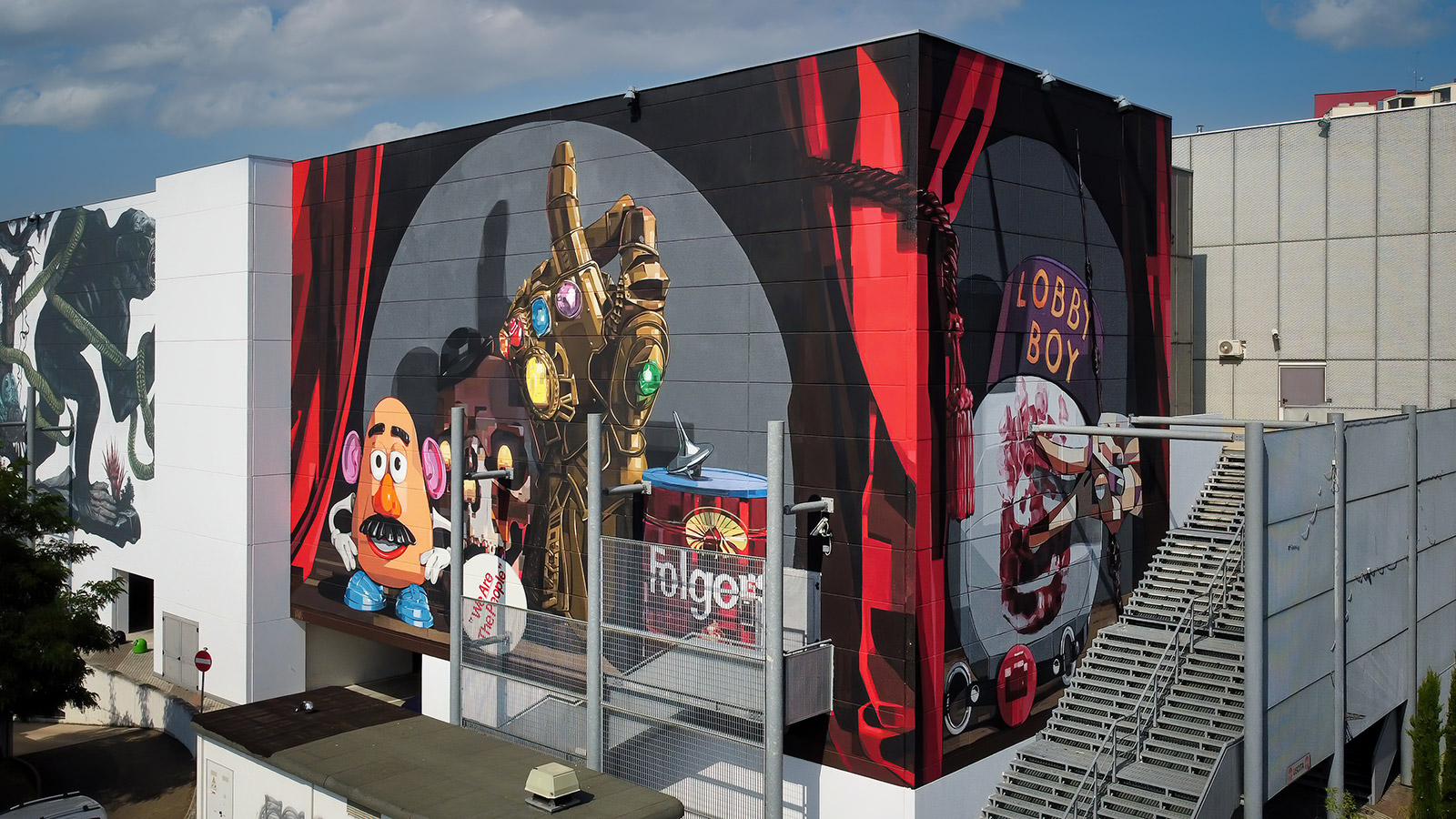
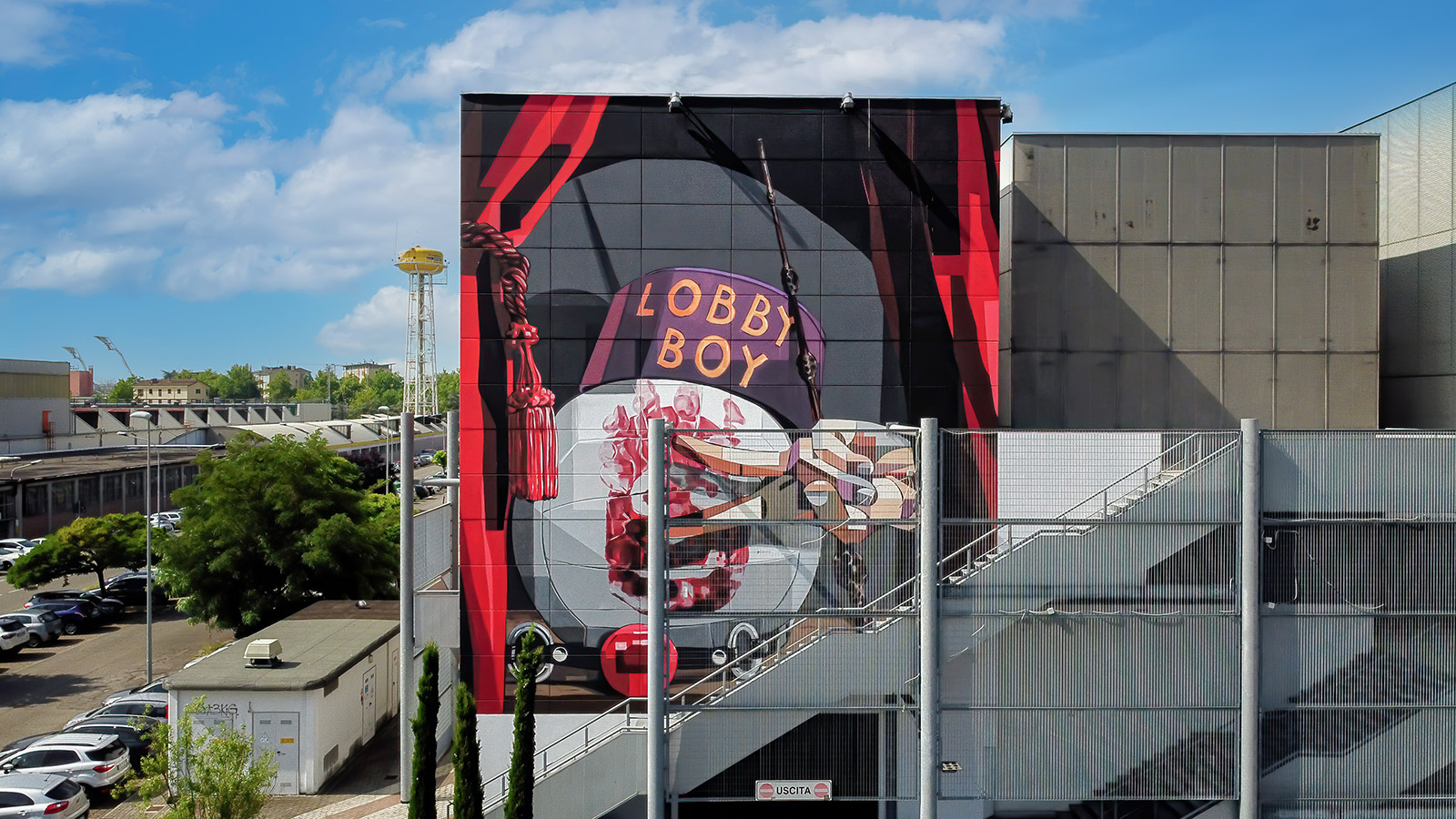
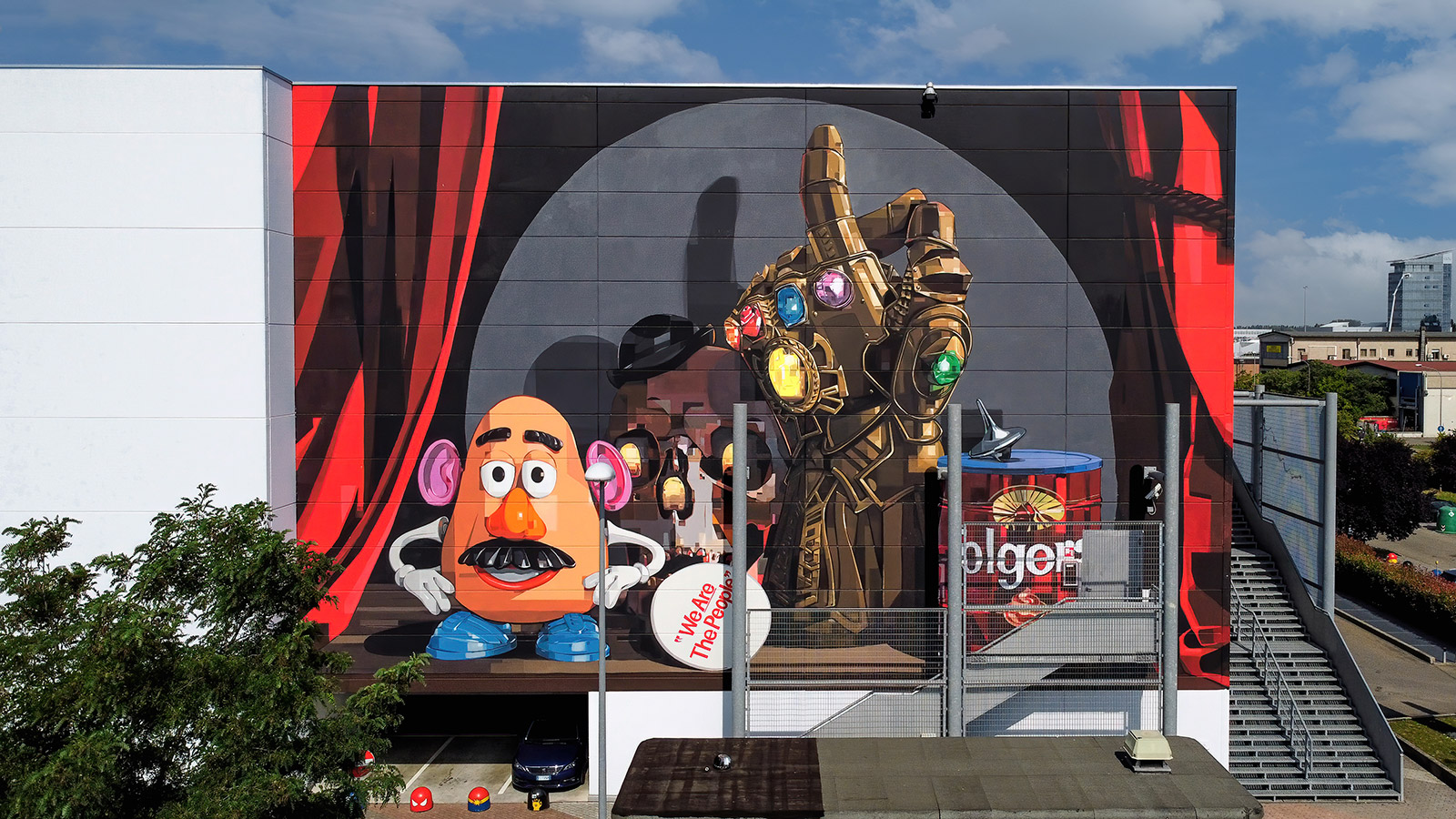
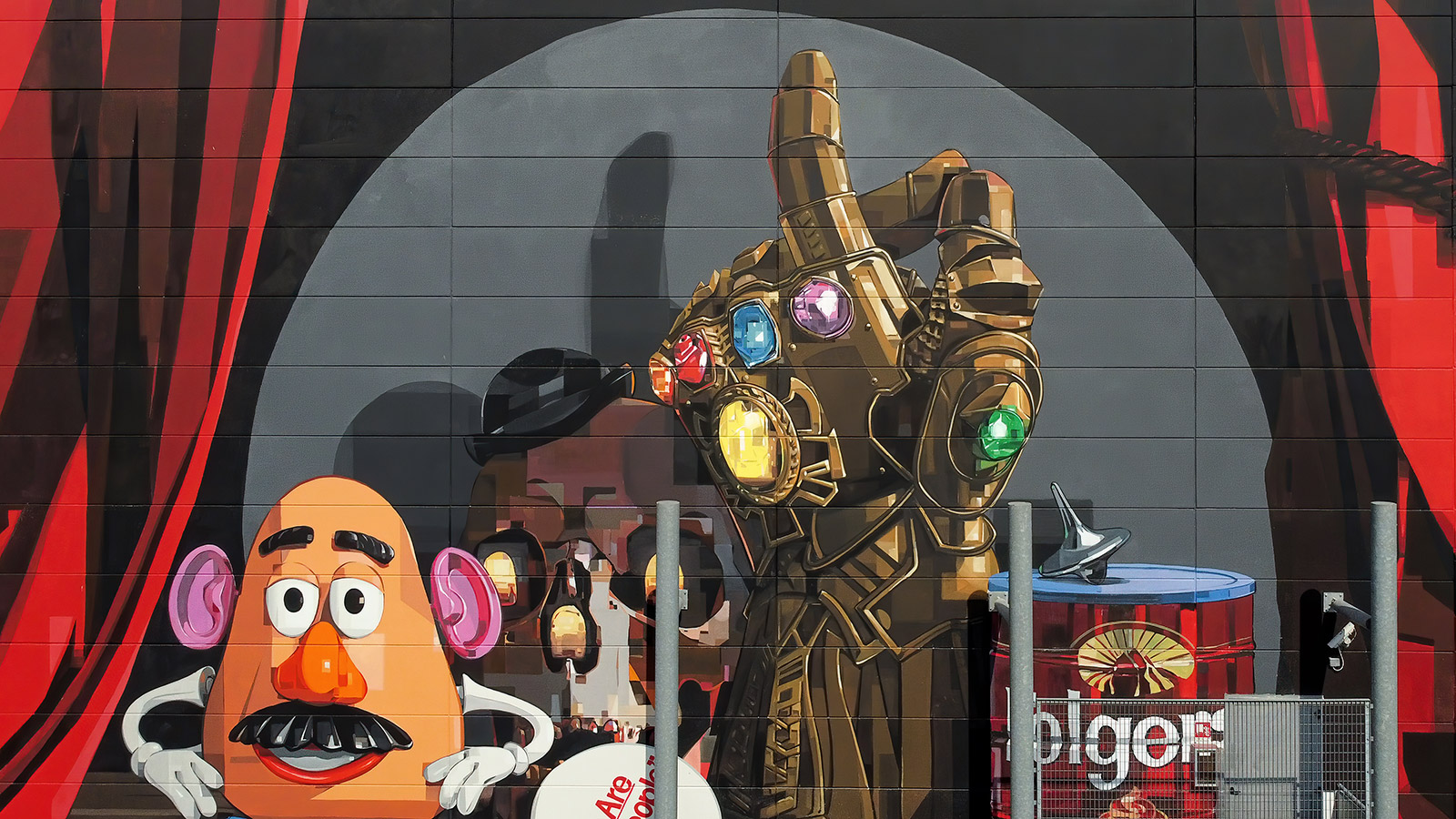
400 sq m commission for Cinema Victoria, Modena.
A blend of iconic movie elements part of contemporary pop culture with a still life approach. Despite the choice of such elements being more challenging in comparison to my standard imagery, the goal has been nonetheless to try to keep coherence to my body of work while paying homage to the pieces of the masters of European 17th Century regardless of the items portrayed.
A blend of iconic movie elements part of contemporary pop culture with a still life approach. Despite the choice of such elements being more challenging in comparison to my standard imagery, the goal has been nonetheless to try to keep coherence to my body of work while paying homage to the pieces of the masters of European 17th Century regardless of the items portrayed.
Unaesthetic Aesthetics
Seattle, USA 2018
Seattle, USA 2018
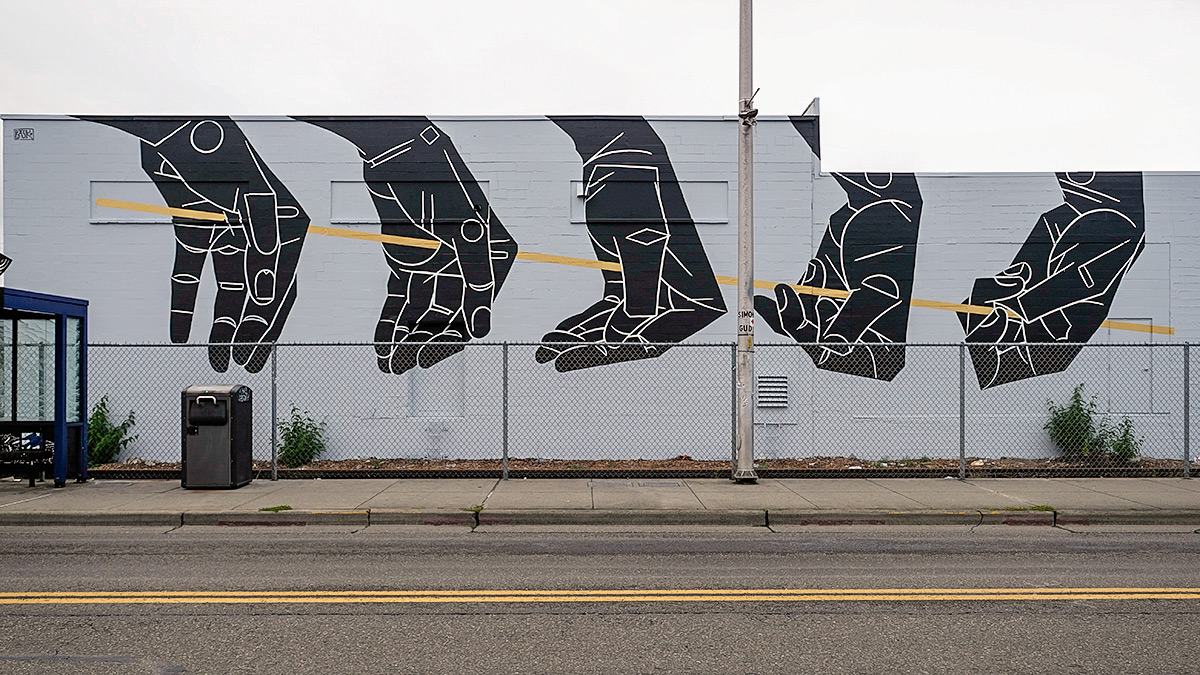
Mural for SODO Track in Seattle. A project by 4 Culture.
Five hands as five frames following the concept of movement. A reference, on a deeper level, to how contemporary society perceives and quickly “consumes” the lives of others and –in case of artists– their work, based on the fruition of pictures that are “framed” on digital platforms (such as social networks).
The progression, from left to right, towards an unnatural and awkward pose challenges the idea of filtered perfection that is often seen and perceived on social media from a user/viewer’s perspective.
A golden line connecting the five black hands by passing through their flesh acts a physical link that further supports the idea of motion, while aiming to be a tribute to the depiction of St. Sebastian in Renaissance art (and onward), in which arrows symbolize the brushes used by the artist himself, while the martyred body metaphorizes a canvas.
Five hands as five frames following the concept of movement. A reference, on a deeper level, to how contemporary society perceives and quickly “consumes” the lives of others and –in case of artists– their work, based on the fruition of pictures that are “framed” on digital platforms (such as social networks).
The progression, from left to right, towards an unnatural and awkward pose challenges the idea of filtered perfection that is often seen and perceived on social media from a user/viewer’s perspective.
A golden line connecting the five black hands by passing through their flesh acts a physical link that further supports the idea of motion, while aiming to be a tribute to the depiction of St. Sebastian in Renaissance art (and onward), in which arrows symbolize the brushes used by the artist himself, while the martyred body metaphorizes a canvas.
Swipe to Unluck
Ibiza, Spain 2018
Ibiza, Spain 2018
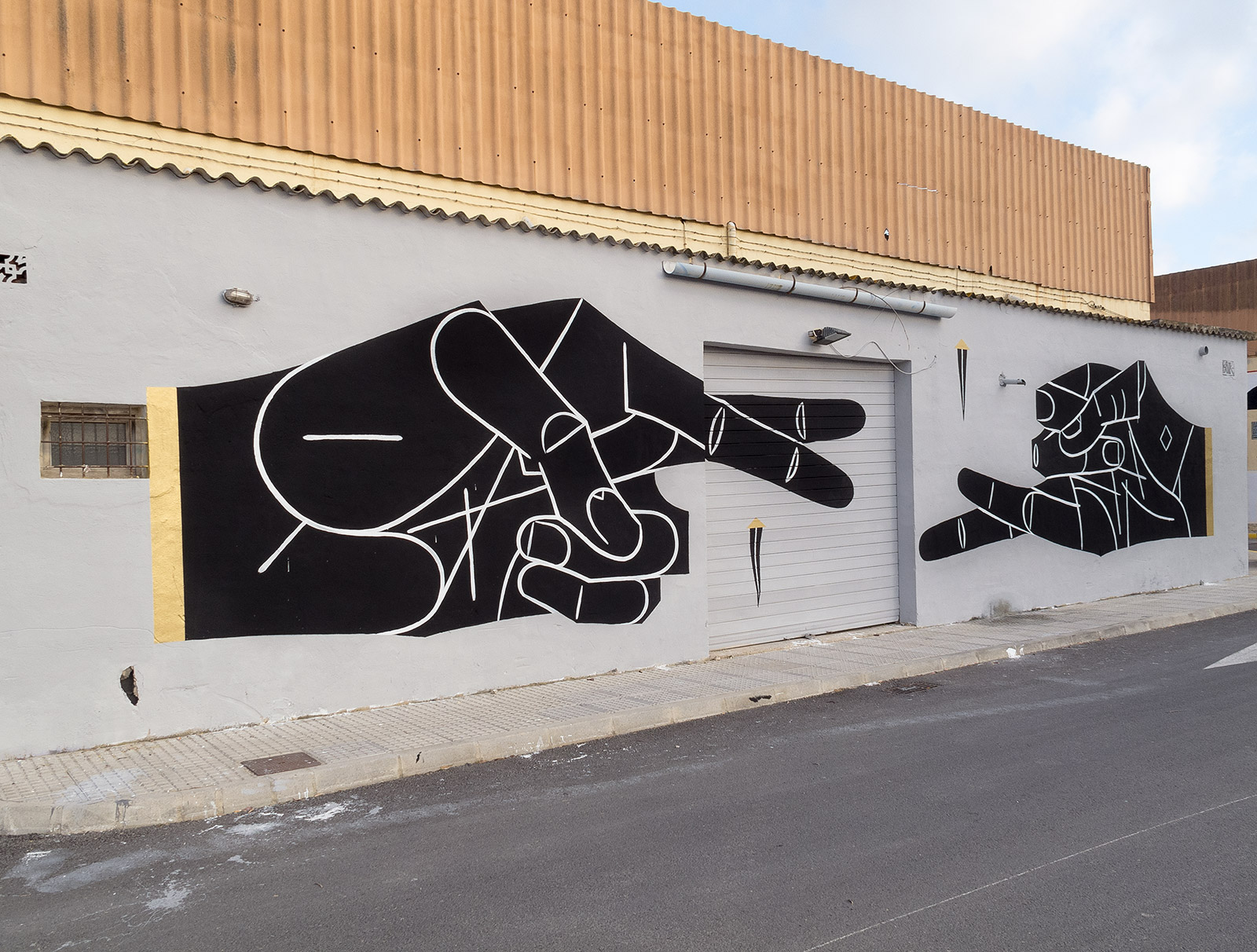
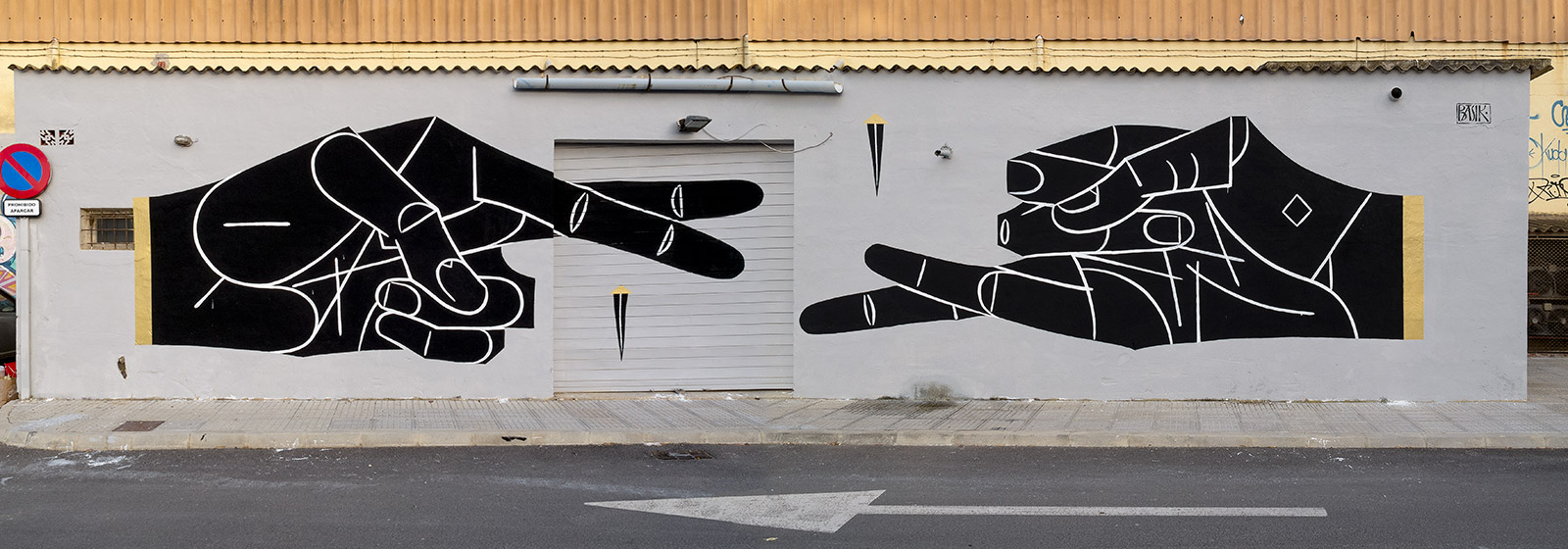
Having its origin in biblical Israel, the crossing fingers gesture has been commonly used since early Christianity as a symbol of Christ’s cross to invoke protection against evil.
While losing its religious value, fingers crossed have lived throughout ages to contemporaneity as a symbol of luck, transcending and adapting to cultural shifts over time.
Can a symbol so strong maintain its value when an attempt to change form is made? Can a concept survive through physical evolution as well as it has survived the loss of religious severity due to progressive metabolization in popular culture?
While losing its religious value, fingers crossed have lived throughout ages to contemporaneity as a symbol of luck, transcending and adapting to cultural shifts over time.
Can a symbol so strong maintain its value when an attempt to change form is made? Can a concept survive through physical evolution as well as it has survived the loss of religious severity due to progressive metabolization in popular culture?
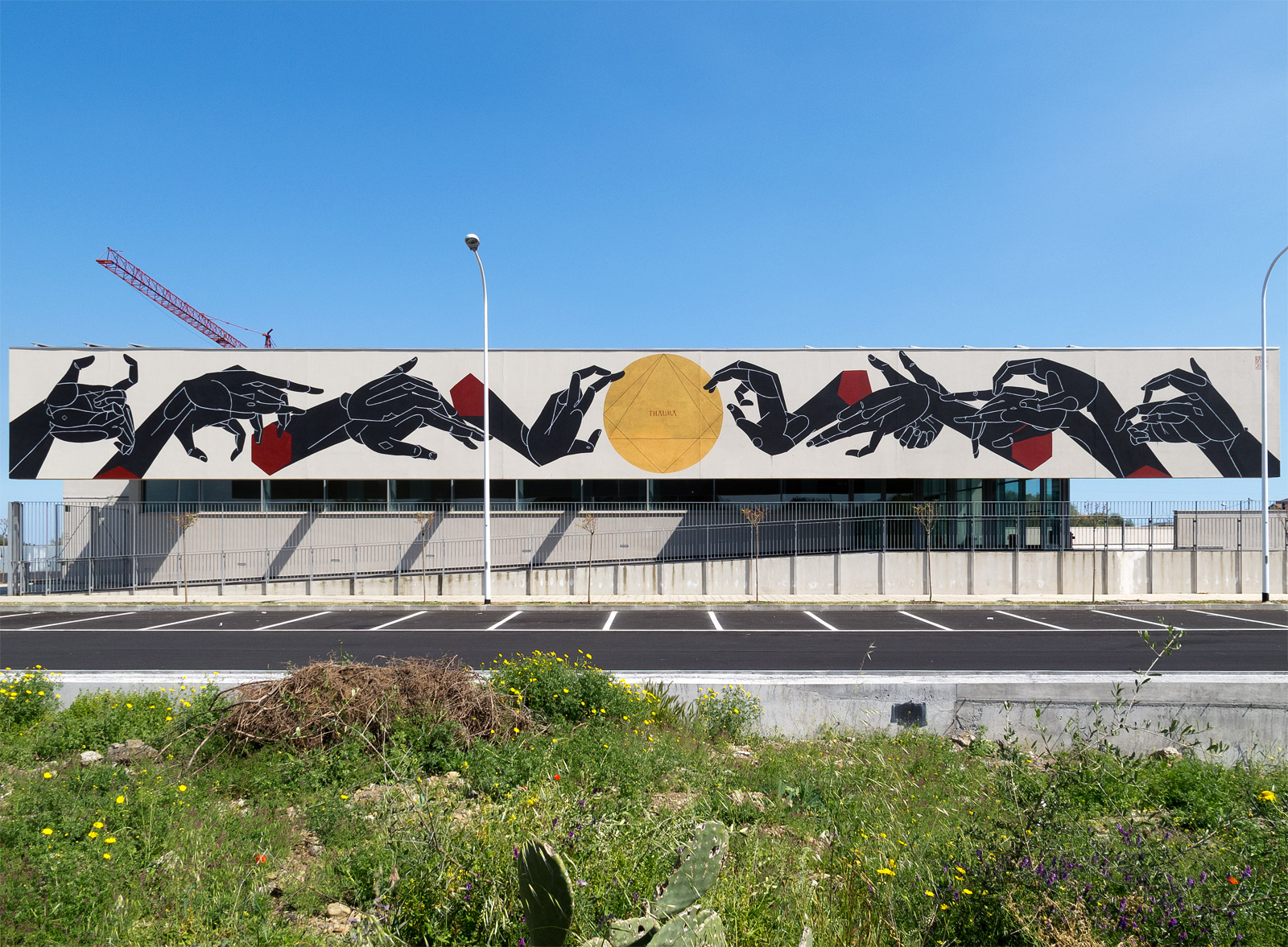
Thauma (The temptation of Saint Anthony)
Misterbianco, Italy 2015
Misterbianco, Italy 2015
Mural for I-Art Residency.
Saint Anthony, commonly venerated for his protection from fire, is Misterbianco’s patron, as the town celebrates the saint every year since its destruction by a severe Etna’s eruption in 1669.
Saint Anthony, commonly venerated for his protection from fire, is Misterbianco’s patron, as the town celebrates the saint every year since its destruction by a severe Etna’s eruption in 1669.
Hands casting animals as chinese shadows play are protracted to poke St. Anthony, which is abstractly represent by a geometrical golden element at the center of the scene.
Thauma is the greek word for wonder, as a celebration of the land surrounding mount Etna (the painting is in fact facing the volcano). Nonetheless the greek letter T or “Tau” is a common symbol defining St. Anthony.
Thauma is the greek word for wonder, as a celebration of the land surrounding mount Etna (the painting is in fact facing the volcano). Nonetheless the greek letter T or “Tau” is a common symbol defining St. Anthony.
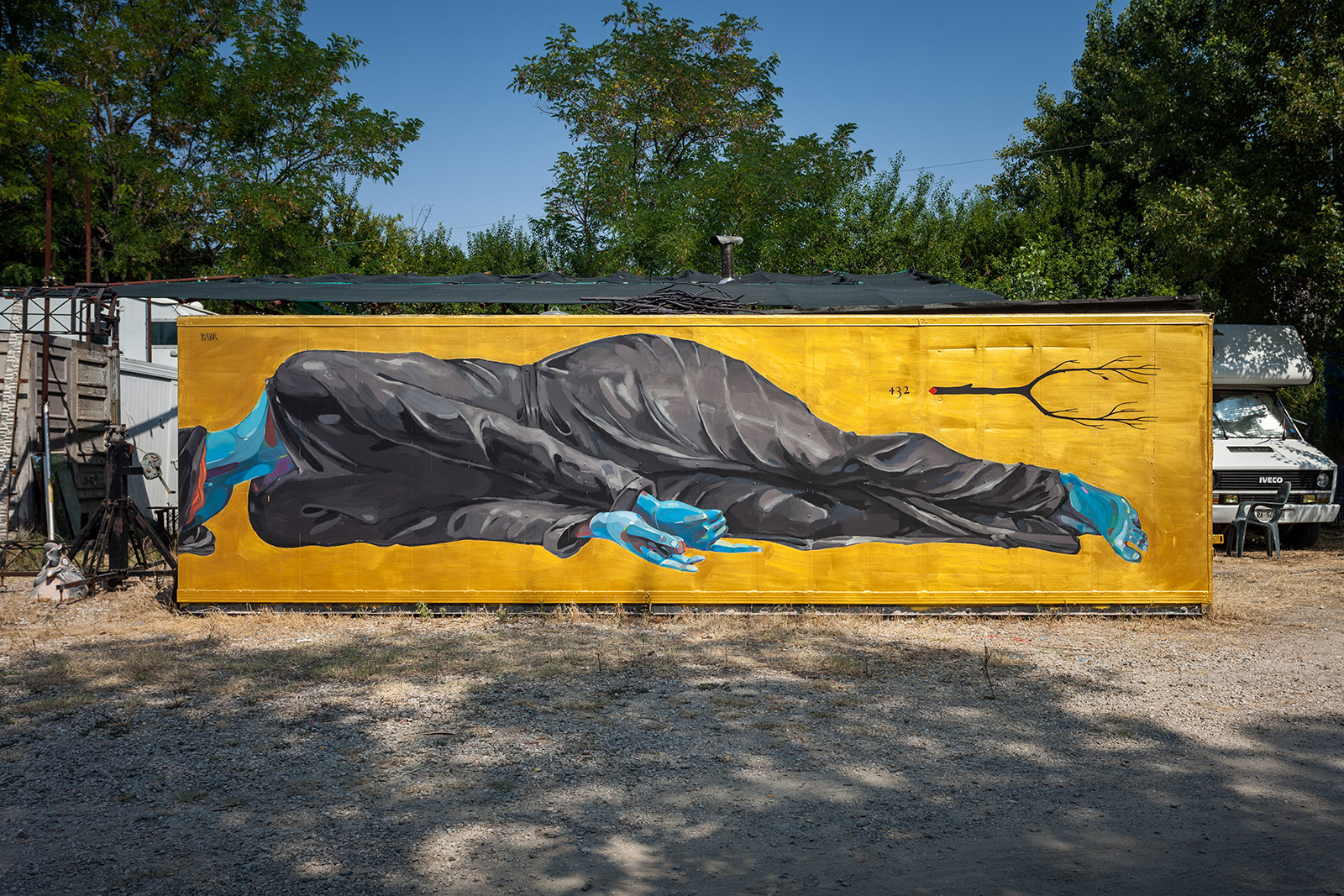
No Title (St. Cecilia)
Santarcangelo di R., Italy 2015
Santarcangelo di R., Italy 2015
Featuring a frontal tribute of Stefano Maderno’s sculpture, the “Martyrdom of Saint Cecilia”, a noble roman woman and early christian martyr which later became titled as protector of musicians; it’s followed by a branch resembling a natural diapason, with the Phylosophical pitch value by its side.
On the side a seven-pointed stars that thinly wants to remind the seven chords of Orpheus’ lyra, which was used by the ‘first of all artists’ to charm every living thing.
On the side a seven-pointed stars that thinly wants to remind the seven chords of Orpheus’ lyra, which was used by the ‘first of all artists’ to charm every living thing.
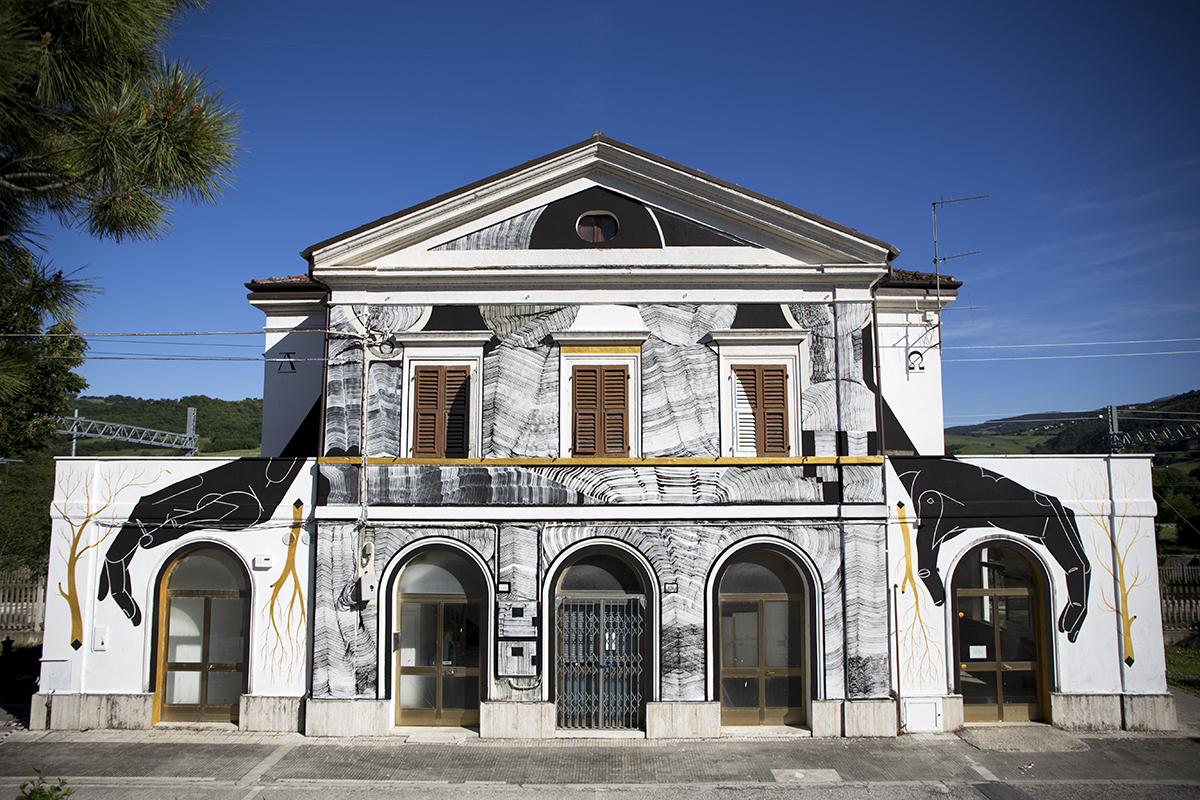


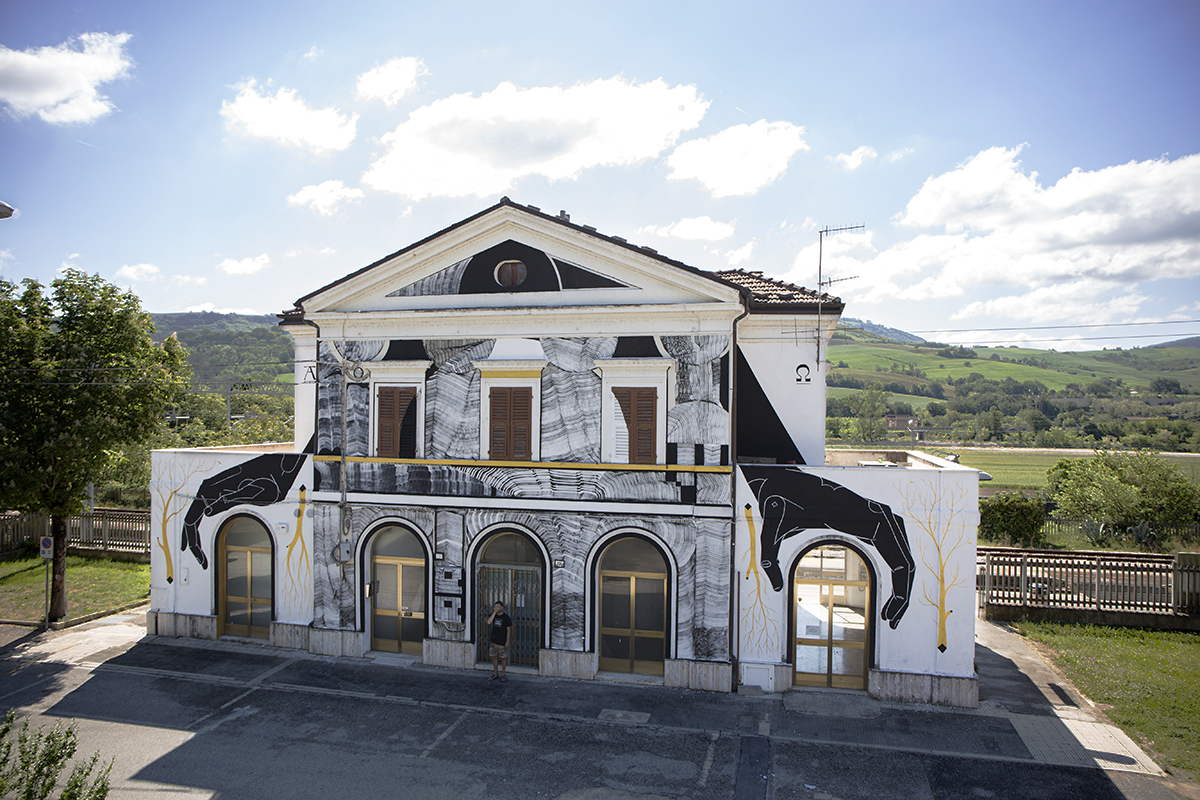

Alpha and Omega
Serra S. Quirico, Italy 2015
Serra S. Quirico, Italy 2015
Collaboration with 2501 for PopUp! festival. Together we painted the train station of Serra San Quirico, surrounded by the beautiful hills of Colli Esini, close to the city of Ancona, Italy.
Omissis
Gdynia, Poland 2014
Gdynia, Poland 2014
Mural painted for Traffic Design festival.
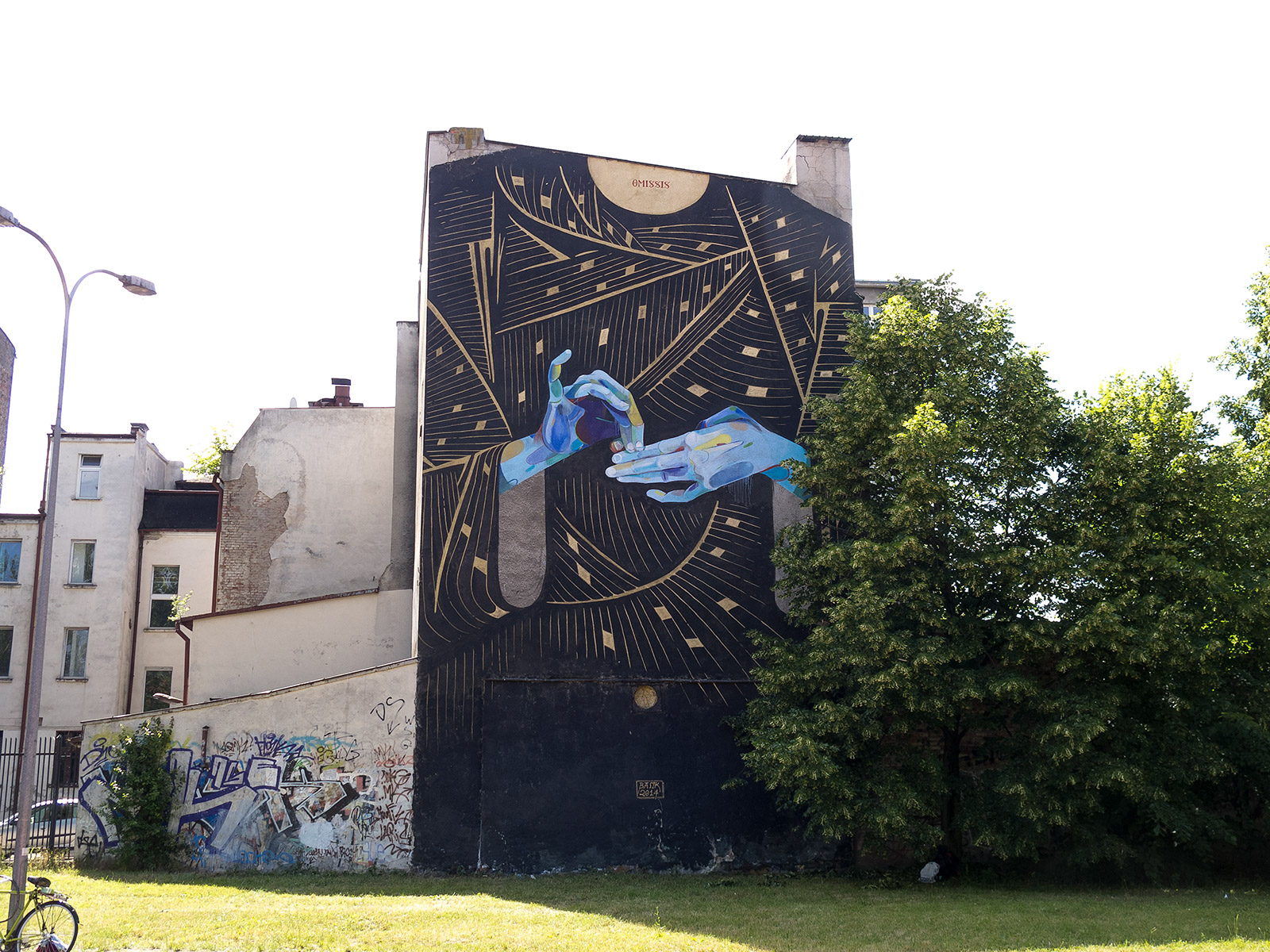
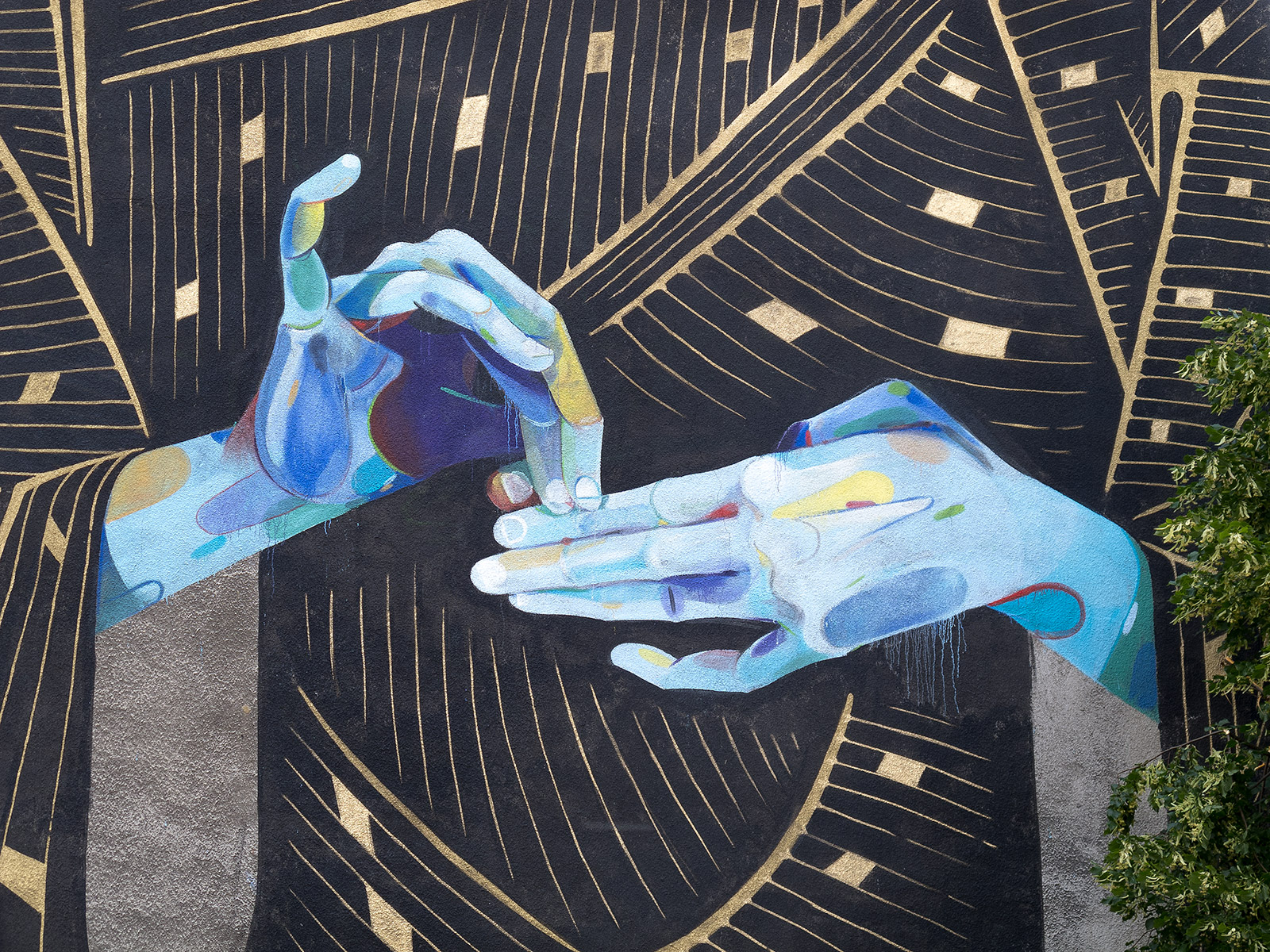
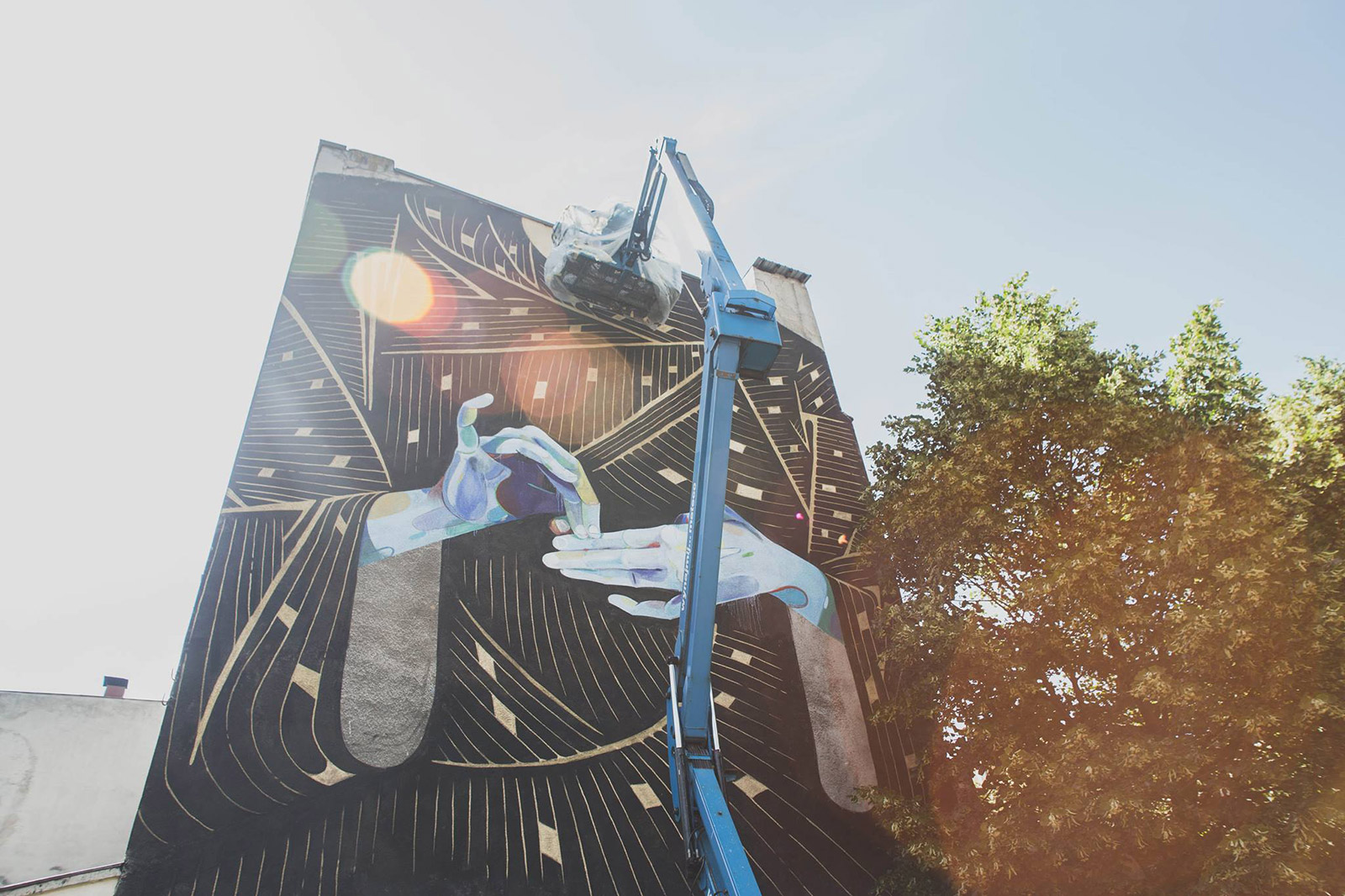
The subject casts a gesture resembling the thumb pull-off trick, while the black robe with golden highlights is a tribute to the work of italian master Duccio di Buoninsegna. On top lies the latin word Omissis, referring to both the gesture and the distinctive figure’s framing in the façade.
The subject casts a gesture resembling the thumb pull-off trick, while the black robe with golden highlights is a tribute to the work of italian master Duccio di Buoninsegna. On top lies the latin word Omissis, referring to both the gesture and the distinctive figure’s framing in the façade.
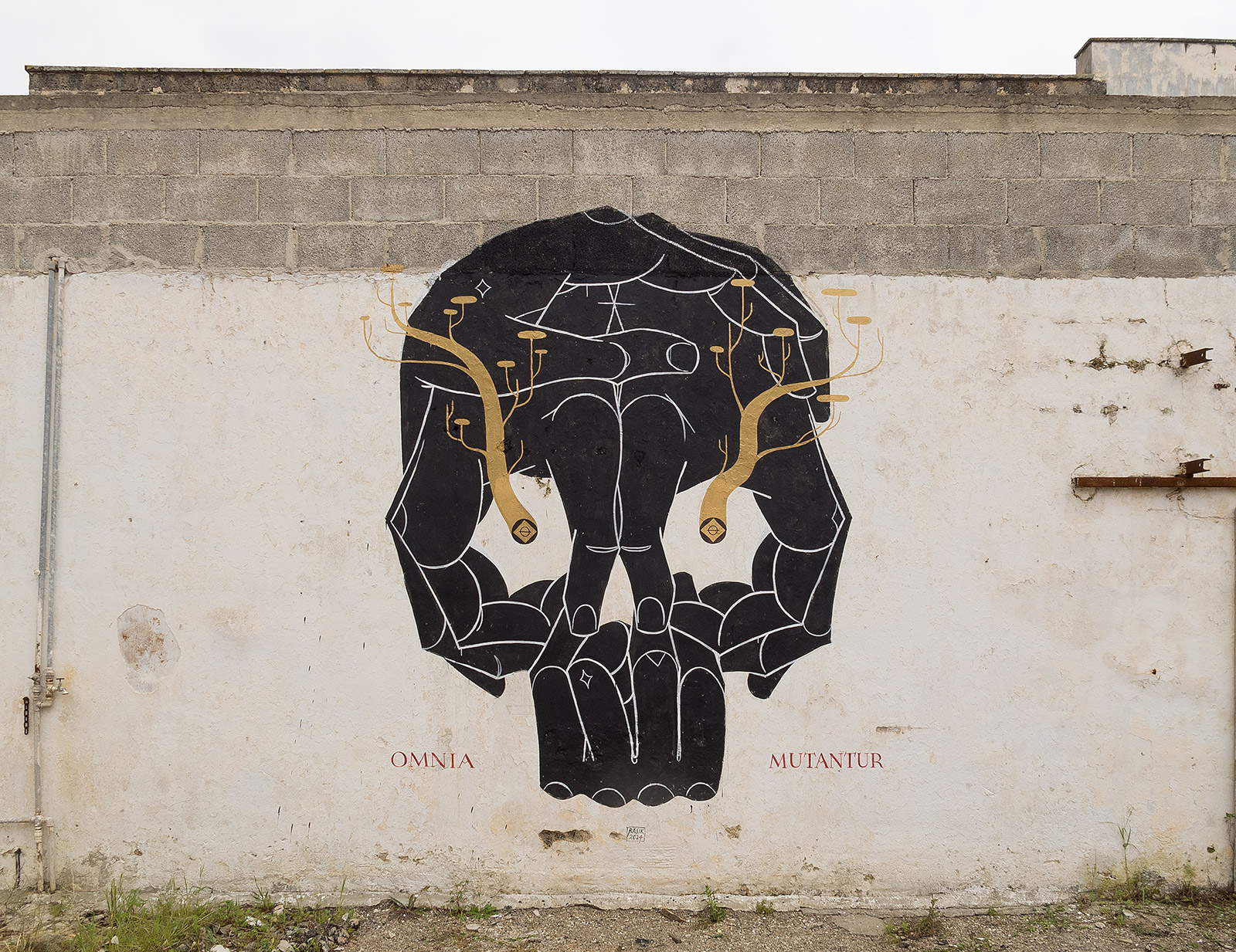
Eraclia / Omnia Mutantur
Racale, Italy 2014
Racale, Italy 2014
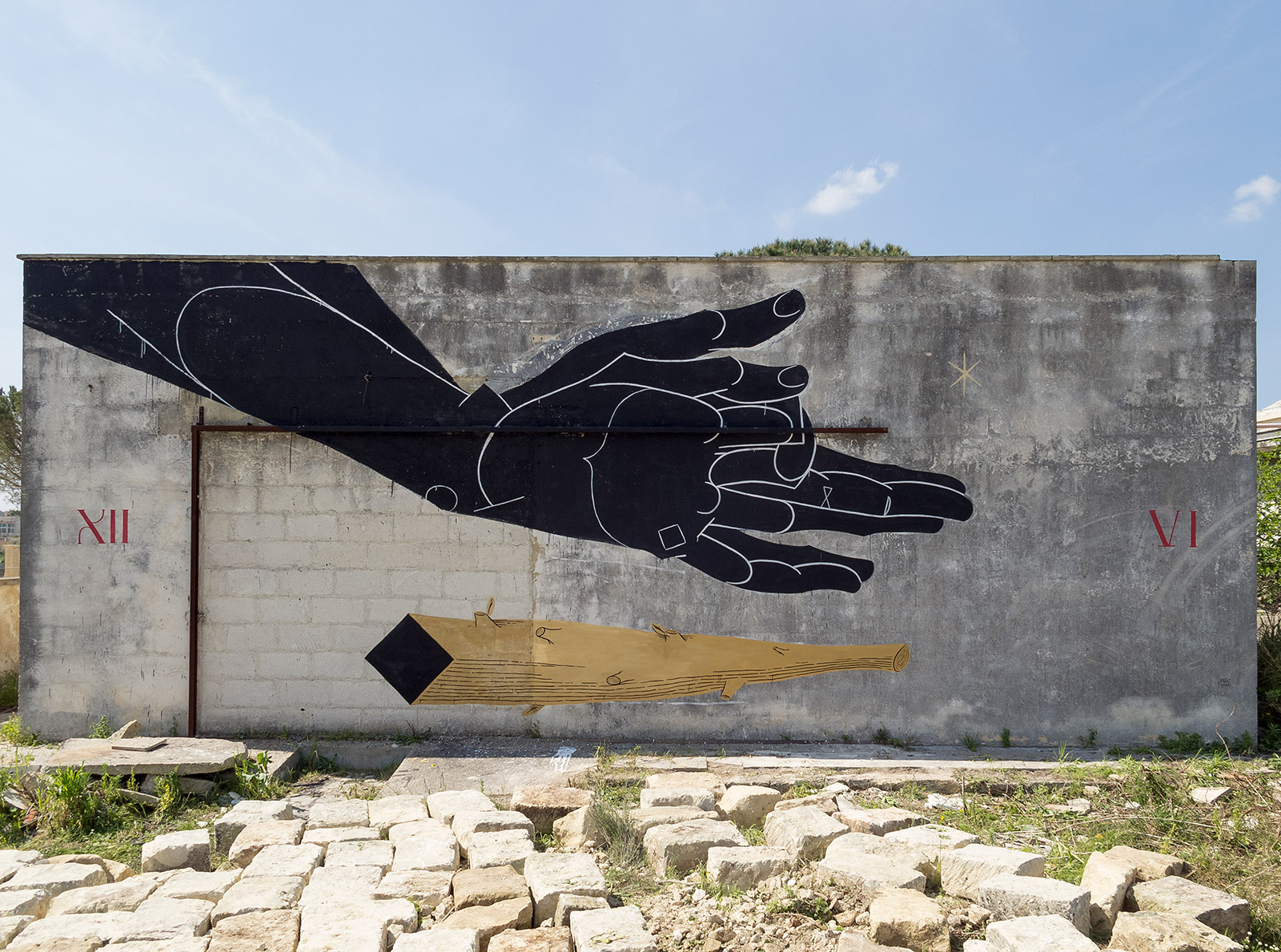
Two black hands casting the shadow of a wolf serve as reminders for the famous Rome’s she-wolf featured in Racale’s seal, probably due to Eraclio, a roman freedman who founded the town.
XII and VI numbers symbolize the twin brothers Romulus and Remus, who, according to Rome’s foundation myth, asked the Gods for a sign to claim the right of foundation of the city. Romulus saw twelve auspicious vultures, while Remus just six.
As a second theory about the genesis of Racale suggests that a Heracles’ worship site was once built in the very same area of the town during greek occupation, the olive club at the bottom of the painting refers to the legend of the divine hero’s slay of the Nemean Lion, in which an eradicated olive tree was used by Heracles as a weapon against the monster. The region surrounding Racale is in fact filled with olive trees.
XII and VI numbers symbolize the twin brothers Romulus and Remus, who, according to Rome’s foundation myth, asked the Gods for a sign to claim the right of foundation of the city. Romulus saw twelve auspicious vultures, while Remus just six.
As a second theory about the genesis of Racale suggests that a Heracles’ worship site was once built in the very same area of the town during greek occupation, the olive club at the bottom of the painting refers to the legend of the divine hero’s slay of the Nemean Lion, in which an eradicated olive tree was used by Heracles as a weapon against the monster. The region surrounding Racale is in fact filled with olive trees.